
Navkar Mantra
नमस्कार महामंत्र • Namaskar Mahamantra


The Navkar Mantra (Namaskar Mahamantra) is the most fundamental prayer in Jainism. It bows not to any god or person, but to five spiritual qualities - so it belongs to no sect and never goes out of date.
Sutra
How to Say It
Meaning
Namo Arihantanam
I bow to the Arihants - the enlightened souls who have conquered attachment and aversion (the four passions, kashaya: anger, ego, deceit, greed) and become omniscient while still living and teaching.
Namo Siddhanam
I bow to the Siddhas - the fully liberated souls who have attained moksha.
Namo Ayariyanam
I bow to the Acharyas - the heads of the order who guide us on the path.
Namo Uvajjhayanam
I bow to the Upadhyayas - the preceptors who teach the scriptures.
Namo Loe Savva Sahunam
I bow to all the Sadhus in the universe - the ascetics practising self-realization.
Eso Panch Namukkaro, Savva Pavappanasano
This fivefold salutation destroys all sins,
Mangalanam cha Savvesim, Padhamam Havai Mangalam
and of all auspicious things, it is the first and foremost.
Word by Word
Going Deeper
Why Arihant - and why first?
An Arihant has destroyed the four ghati (soul-obscuring) karmas and become omniscient, yet still lives with a body and teaches. We bow to the Arihant even before the Siddha - though the Siddha is spiritually higher - because it is the living Arihant who reveals the path. Without the one who shows the way, we would never even know the liberated soul exists. It is a bow of gratitude to the guide who is present.
Why Siddha
A Siddha has burned away all eight karmas, dropped the body forever, and become pure consciousness - infinite knowledge, bliss and energy. This is not a distant god; it is what your own soul already is beneath its karma. Bowing to the Siddha is bowing to your own highest possibility.
Why Acharya, Upadhyay, Sadhu
These three keep the path walkable today: the Acharya leads the order and lives the code, the Upadhyay teaches the scriptures, and the Sadhu is the sincere practitioner walking it right now. The awakened one, the liberated one, and the three who carry the living tradition - the mantra covers the whole spiritual ecosystem.
The hidden 108
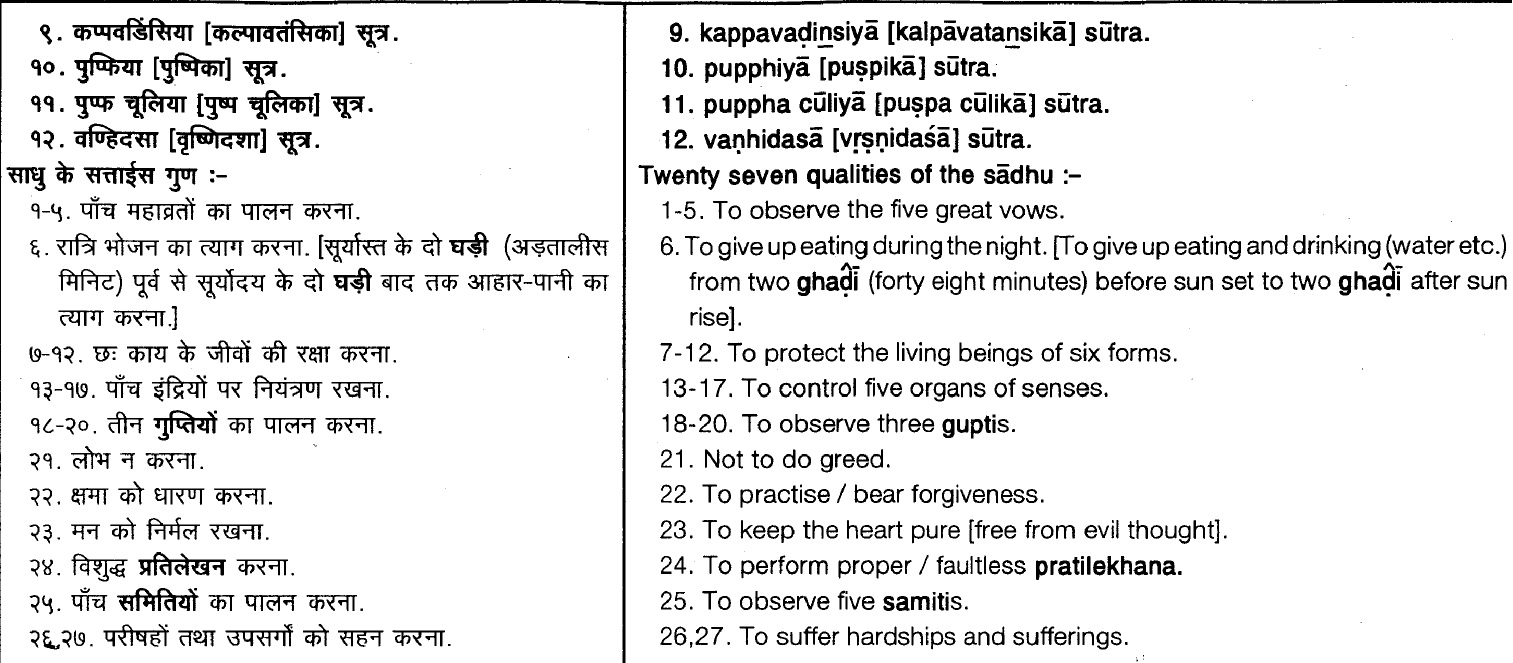
Count the qualities of the five: Arihant 12 + Siddha 8 + Acharya 36 + Upadhyay 25 + Sadhu 27 = 108. That is exactly why a japa mala has 108 beads - one bead for each quality of the five you salute. Every round of the mala is a walk through all 108.
One mantra, all six Avashyaks
A hidden design: the nine lines quietly contain all six daily duties (avashyak) of a Jain:
- Namo - Samayik (equanimity): the bow itself is humility and evenness
- Arihantanam, Siddhanam - Chauvisattho: praise of the awakened and liberated (the 24 Tirthankars)
- Ayariyanam, Uvajjhayanam, Loe Savva Sahunam - Vandana: reverence to the guides
- Eso Panch Namukkaro, Savva-pavappanasano - Pratikraman: turning back from all sin
- Mangalanam cha Savvesim - Kaussagg: standing in the auspicious
- Padhamam Havai Mangalam - Pachchakkhan: the resolve of the foremost good
So a single recitation is, in miniature, the whole daily practice.
Deep Dive
The 6 inner enemies (why 'Ari-hant')
'Arihant' means destroyer of enemies - but not outer ones. The real enemies are inside, and an Arihant has conquered all six:
- Indriya (sense organs) - the five senses pulled into wrong activity
- Vishaya (objects of pleasure) - craving for what the senses chase
- Kashaya (passions) - anger, ego, deceit, greed
- Parishaha (hardships) - being shaken by hunger, thirst and discomfort
- Vedana (feelings) - clinging to pleasure, recoiling from pain
- Upasarga (afflictions) - disturbances caused by humans, animals or even gods
So every time you bow to an Arihant, you are honouring a victory you are also meant to win.
Arihant - the 12 gunas (8 pratiharya + 4 atishaya)
8 Pratiharyas - the divine attendance the gods create:
- Ashok vruksha - an Ashoka tree twelve times the Lord's height
- Sura-pushpa-vrishti - gods shower fragrant flowers knee-deep
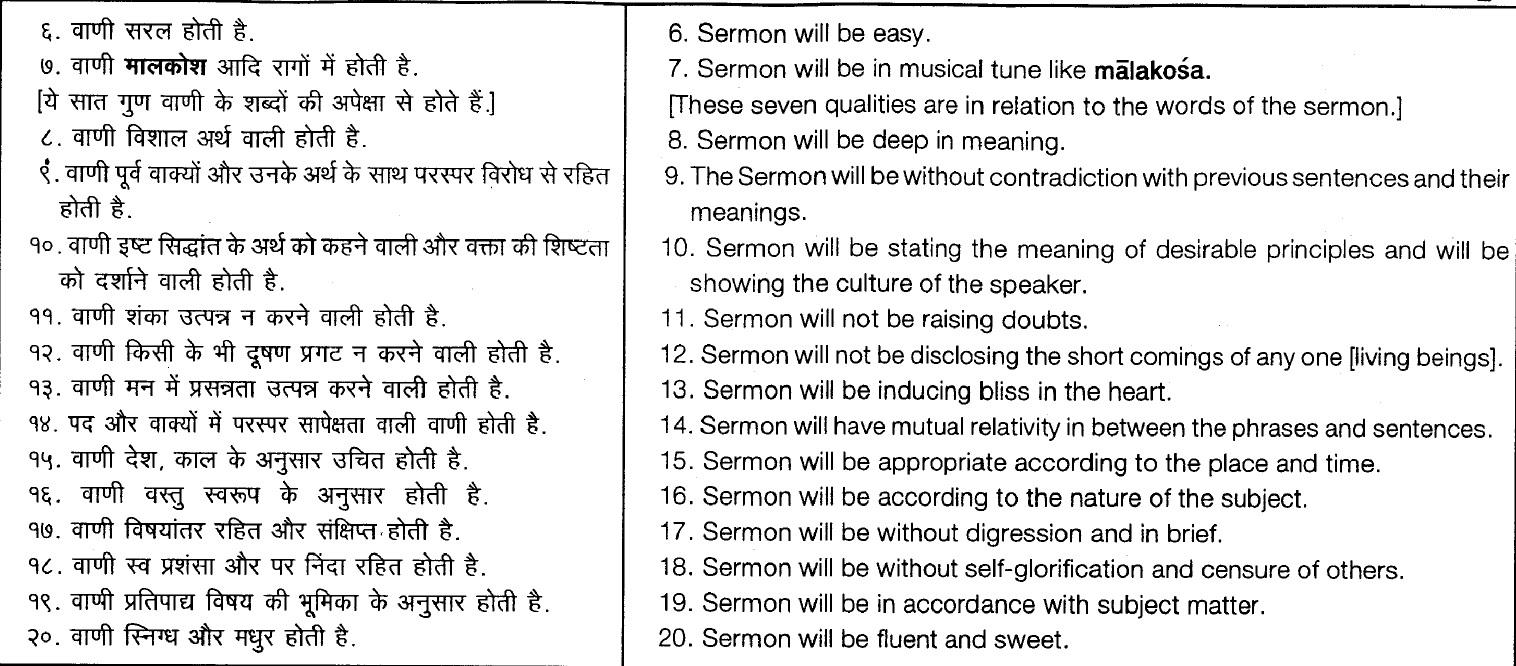
- Divya-dhvani - a divine musical resonance in the sermon
- Chamar - jewelled golden whisks waved beside Him
- Sinhasana - a jewelled golden throne
- Bhamandal - a radiant halo behind the head
- Deva-dundubhi - the gods sound divine drums
- Chatra-traya - three tiered golden umbrellas
4 Atishayas - supreme excellences:
- Apayapagam - disease, enmity, calamity vanish within 125 yojanas
- Jnana - every being's doubt is resolved in His presence
- Puja - Indras, emperors, gods and all beings worship Him
- Vachana - His speech is understood by all, each in their own language
Inner Meaning & Psychology
Notice what this mantra does not do: it never names a god. It bows to five states of being - the awakened (Arihant), the liberated (Siddha), and the three who guide (Acharya, Upadhyay, Sadhu). You are not worshipping a personality; you are honouring qualities you can grow toward yourself.
The four passions (kashaya) - anger, ego, deceit and greed - are the real battle; they sit at the core of the six inner enemies shown in the chart below. Every recitation quietly re-points the mind: the enemy is not the person in front of me, it is the reaction rising within me.
That is why it is called the foremost mangal (auspicious). It asks for nothing, yet it purifies - because reverence for these qualities slowly reshapes the one who recites.
There is a hidden ladder in the order. You bow first to the Arihant and Siddha - the summit - then down to the Acharya, Upadhyay and Sadhu, the ones still walking the path. So the mantra is both a salute to the peak and a map of the climb: the Sadhu is the rung you can step onto today.
Why bow at all? In psychology the body leads the mind. Lowering the head softens pride faster than any argument - the posture of humility makes the mind teachable. The Navkar uses the oldest technology for melting ego: the bow.
You slowly become what you repeatedly honour. Each recitation is a quiet vote for the person you are trying to be. That is why it is said to work gently but surely - attention shapes identity, and this mantra keeps pointing attention at five kinds of greatness.
There is a measurable body-side to this. Slow, repeated recitation lengthens the breath and nudges the nervous system out of 'fight-or-flight' into 'rest-and-restore' (the parasympathetic state): the heart rate settles, stress hormones such as cortisol ease off, and the racing mind quietens. You are not only saying words - you are physically down-shifting the body into calm.
On the thinking side, the Navkar moves your locus of control inward. Instead of 'that person made me angry', it trains 'anger rose in me, and I can meet it'. That one shift - from blaming the outside to owning the inside - is exactly what modern psychology calls emotional maturity, and it is where real steadiness begins.
How It Cleanses the Soul
The mantra asks for nothing - no wealth, no wish, no bargain. That is the secret of how it purifies. Most prayers quietly feed the ego ("give me..."); the Navkar only bows. And bowing is the one act the ego cannot survive intact.
Jainism says karma sticks to the soul through kashaya - anger, ego, deceit, greed. Weaken the kashaya and the glue loosens: old karma sheds (nirjara) and new karma stops sticking (samvar). Recited with real reverence, pride softens, and in that softened state the soul quietly cleans itself. "Savva-pava-ppanasano" - destroyer of all sin - is not magic; it is this inner chemistry.
What to carry away: a sutra is not finished when the words end. Carry one line into the day. Meet anger, and remember you just bowed to those who conquered it. That remembering, repeated, is the actual practice.
There is an attention angle too. Said slowly on a mala, every bead is a small return to centre - the mind that was spinning in worry or anger comes back, again and again. Over one round of 108 that is a hundred-plus resets. Modern minds call it attention training; the tradition calls it japa.
Notice that it cleanses by subtraction, not addition. You are not piling up merit by asking for things; you are setting down weight - the weight of ego, grudge and craving - every single time you bow and truly mean it.
Here is karma in everyday terms. Every sharp reaction - a flash of anger, a grip of greed - presses a groove into the mind, a tendency to react the same way next time. Jainism calls the forming of that groove the binding of karma, and the glue is kashaya (passion). Each time the mantra steadies you before you react, no new groove forms - that is samvar: fewer new karmas.
And the old grooves fade when they are not fed. Meet the same trigger with calm instead of anger, again and again, and the pattern weakens and lifts - the tradition calls this nirjara, the shedding of stored karma. In plain words, you break a bad karma the way you break any bad habit: by not repeating it, and by replacing the old reaction with reverence.
The by-product is genuine positiveness. A mind that bows to calm, freedom and wisdom several times a day slowly leans toward those very moods. You are practising gratitude and aspiration on repeat - and a grateful, aspiring mind is simply a lighter, happier one.
In Today's Language (Gen-Z)
Think of it as saving five green-flag role models, not five gods. Arihant = someone who beat their own ego and anger and stayed calm. Siddha = fully free, game completed. Acharya, Upadhyay, Sadhu = the coach, the teacher, the sincere player. You are not fanboying a celebrity - you are following five people worth becoming.
Think of it like curating your 'For You' feed: whatever you give attention to, you slowly become. The Navkar pins five people-worth-becoming to the top of your feed.
No paywall, no gatekeeping, no fandom wars - it names no particular god, so literally anyone can run it.
It is a flex in reverse. Instead of 'look at me', it is 'look up to this'. The humility is the whole point - and weirdly, it is what makes you stronger.
The science is honestly pretty cool: slow chanting flips your nervous system into 'chill mode', drops the stress chemicals, and quiets the mental doom-scroll. Repeating a calm focus actually rewires the brain over time (neuroplasticity) - you are training the muscle of not-reacting.
Picture bad karma as a habit loop: trigger -> react -> repeat, stronger each round. Every time the mantra helps you not snap, that loop gets weaker; do it enough and the old pattern basically uninstalls. That is 'burning karma' in words anyone gets - and the calmer, more positive you is the upgrade you unlock.
Why We Recite It
We recite it first, before anything else, because it sets the mind's home screen. No name, no wish, no bargain with God - just a bow to the qualities we want to grow. Say it slowly once and you have already pointed yourself in the right direction for the day.
Frequently Asked Questions
What is the Navkar Mantra?
The Navkar (Namaskar) Mahamantra is the most fundamental prayer in Jainism. It salutes the five supreme beings - Arihant, Siddha, Acharya, Upadhyay and Sadhu - bowing to spiritual qualities rather than to any god or named person.
What does it mean?
I bow to the Arihants, the Siddhas, the Acharyas, the Upadhyays, and to all the Sadhus in the universe. This fivefold salutation destroys all sins and is the foremost of all auspicious things.
Why is Arihant bowed to before Siddha, when the Siddha is spiritually higher?
Because the living, teaching Arihant reveals the path. Without the guide who shows the way, we would not even know of the liberated Siddha.
Do I have to be a Jain to recite it?
No. It names no god and belongs to no sect, so anyone may recite it. It is commonly chanted on a 108-bead mala - one bead for each of the 108 qualities of the five supreme beings.
Key Terms
नवकार मंत्र (नमस्कार महामंत्र) जैन धर्म का सबसे मूल मंत्र है। यह किसी देव या व्यक्ति को नहीं, बल्कि पाँच आध्यात्मिक गुणों को नमस्कार करता है - इसलिए यह किसी संप्रदाय का नहीं है और कभी पुराना नहीं होता।
सूत्र
अर्थ
नमो अरिहंताणं
मैं अरिहंतों को नमस्कार करता हूँ - वे प्रबुद्ध आत्माएँ जिन्होंने राग-द्वेष, अर्थात चार कषाय (क्रोध, मान, माया, लोभ) पर विजय पाई और सदेह रहते हुए सर्वज्ञता प्राप्त की।
नमो सिद्धाणं
मैं सिद्धों को नमस्कार करता हूँ - वे मुक्त आत्माएँ जिन्होंने मोक्ष प्राप्त कर लिया है।
नमो आयरियाणं
मैं आचार्यों को नमस्कार करता हूँ - जो संघ का मार्गदर्शन करते हैं।
नमो उवज्झायाणं
मैं उपाध्यायों को नमस्कार करता हूँ - जो शास्त्रों का अध्ययन कराते हैं।
नमो लोए सव्वसाहूणं
मैं लोक के समस्त साधुओं को नमस्कार करता हूँ - जो आत्मसाधना के मार्ग पर हैं।
एसो पंच नमुक्कारो, सव्वपावप्पणासणो
यह पाँच नमस्कार समस्त पापों का नाश करता है,
मंगलाणं च सव्वेसिं, पढमं हवइ मंगलं
और सभी मंगलों में यह प्रथम एवं श्रेष्ठ मंगल है।
शब्दशः अर्थ
गहराई से समझें
अरिहंत क्यों - और सबसे पहले क्यों?
अरिहंत ने चार घाती (आत्मा को ढकने वाले) कर्मों का नाश कर केवलज्ञान पा लिया है, फिर भी देह सहित इस धरती पर विचरते हुए मार्ग का उपदेश देते हैं। हम सिद्ध से भी पहले अरिहंत को नमन करते हैं - यद्यपि सिद्ध आध्यात्मिक रूप से ऊँचे हैं - क्योंकि मार्ग तो जीवित अरिहंत ही दिखाते हैं। जो राह दिखाए ही नहीं, उसके बिना हमें यह भी पता न चलता कि मुक्त आत्मा होती है। यह उस मार्गदर्शक के प्रति कृतज्ञता का नमन है जो अभी उपस्थित है।
सिद्ध क्यों
सिद्ध ने आठों कर्मों को भस्म कर, देह को सदा के लिए छोड़, शुद्ध चैतन्य - अनंत ज्ञान, आनंद और शक्ति - प्राप्त कर लिया है। यह कोई दूर का देवता नहीं; यह वही है जो आपकी अपनी आत्मा कर्मों के नीचे पहले से है। सिद्ध को नमन अपनी ही उच्चतम संभावना को नमन है।
आचार्य, उपाध्याय, साधु क्यों
ये तीन आज मार्ग को चलने योग्य बनाए रखते हैं: आचार्य संघ का नेतृत्व करते और आचार जीते हैं, उपाध्याय शास्त्र पढ़ाते हैं, और साधु उस मार्ग पर अभी चल रहे सच्चे साधक हैं। जाग्रत, मुक्त, और जीवित परंपरा को थामे तीन - यह मंत्र पूरे आध्यात्मिक तंत्र को समेट लेता है।
छिपे हुए 108
पाँचों के गुण गिनिए: अरिहंत 12 + सिद्ध 8 + आचार्य 36 + उपाध्याय 25 + साधु 27 = 108। इसीलिए जप माला में 108 मणके होते हैं - हर मणका इन पाँच के एक गुण के लिए। माला का हर फेरा इन 108 गुणों की यात्रा है।
एक मंत्र, छहों आवश्यक
एक छिपी रचना: नवकार की नौ पंक्तियाँ जैन की छहों दैनिक आवश्यक क्रियाओं को अपने भीतर समेट लेती हैं:
- नमो - सामायिक (समता): यह नमन ही नम्रता और समता है
- अरिहंताणं, सिद्धाणं - चतुर्विंशतिस्तव: जाग्रत और मुक्त (24 तीर्थंकर) का स्तवन
- आयरियाणं, उवज्झायाणं, लोए सव्वसाहूणं - वंदन: गुरुओं को वंदना
- एसो पंच नमुक्कारो, सव्वपावप्पणासणो - प्रतिक्रमण: सब पापों से पीछे हटना
- मंगलाणं च सव्वेसिं - कायोत्सर्ग: मंगल में स्थिर होना
- पढमं हवइ मंगलं - प्रत्याख्यान: सर्वश्रेष्ठ मंगल का संकल्प
इस तरह एक ही जाप, संक्षेप में, पूरी दैनिक साधना है।
विस्तार से जानें
छह आंतरिक शत्रु (इसलिए 'अरि-हंत')
'अरिहंत' यानी शत्रुओं का नाश करने वाले - पर बाहरी नहीं। असली शत्रु भीतर हैं, और अरिहंत ने छहों को जीत लिया है:
- इंद्रिय - अप्रशस्त भाव में प्रवृत्त पाँच इंद्रियाँ
- विषय - इंद्रियों के अनुकूल पदार्थों के प्रति रुचि
- कषाय - क्रोध, मान, माया, लोभ जैसे मानसिक भाव
- परीषह - भूख-प्यास आदि से विचलित होना
- वेदना - शारीरिक और मानसिक सुख-दुःख में उलझना
- उपसर्ग - मनुष्य, तिर्यंच या देवताओं द्वारा किए गए उपद्रव
इसलिए हर बार अरिहंत को नमन करते समय आप उस विजय का सम्मान करते हैं जो आपको भी पानी है।
अरिहंत - बारह गुण (8 प्रातिहार्य + 4 अतिशय)
8 प्रातिहार्य - देवताओं द्वारा रचित दिव्य रचना:
- अशोक वृक्ष - भगवंत के शरीर से बारह गुना ऊँचा
- सुर-पुष्प-वृष्टि - देवता जानु प्रमाण सुगंधी पुष्पों की वृष्टि करते हैं
- दिव्य-ध्वनि - वाणी में संगीतमय स्वर
- चामर - रत्नजड़ित स्वर्णमय चामर ढुलाते हैं
- सिंहासन - रत्नजड़ित स्वर्णमय सिंहासन
- भामंडल - मस्तक के पीछे आभामंडल
- देव-दुंदुभि - देव दुंदुभि बजाते हैं
- छत्र-त्रय - तीन स्वर्णमय छत्र
4 अतिशय - सर्वोत्तम विशेषताएँ:
- अपायापगम - 125 योजन तक रोग, वैर, अतिवृष्टि आदि नष्ट हो जाते हैं
- ज्ञान - हर जीव की शंका का समाधान हो जाता है
- पूजा - इंद्र, चक्रवर्ती, देव आदि सभी पूजा करते हैं
- वचन - वाणी सभी अपनी-अपनी भाषा में समझ लेते हैं
आंतरिक भाव एवं मनोविज्ञान
ध्यान दें कि यह मंत्र किसी देवता का नाम नहीं लेता। यह पाँच अवस्थाओं को नमन करता है - जाग्रत (अरिहंत), मुक्त (सिद्ध), और तीन मार्गदर्शक (आचार्य, उपाध्याय, साधु)। आप किसी व्यक्ति की नहीं, बल्कि उन गुणों की वंदना करते हैं जिन्हें आप स्वयं में विकसित कर सकते हैं।
चार कषाय - क्रोध, मान, माया और लोभ - ही असली युद्ध हैं; ये नीचे दिए चार्ट के छह आंतरिक शत्रुओं के मूल में हैं। हर बार का जाप मन को शांति से पुनः दिशा देता है: शत्रु सामने वाला व्यक्ति नहीं, भीतर उठती प्रतिक्रिया है।
इसीलिए यह प्रथम मंगल कहलाता है। यह कुछ माँगता नहीं, फिर भी शुद्ध करता है, क्योंकि इन गुणों के प्रति श्रद्धा जपने वाले को धीरे-धीरे बदल देती है।
इस क्रम में एक छिपी हुई सीढ़ी है। पहले अरिहंत और सिद्ध को - शिखर को - नमन, फिर आचार्य, उपाध्याय और साधु को, जो अभी मार्ग पर चल रहे हैं। इसलिए यह मंत्र शिखर का अभिवादन भी है और चढ़ाई का नक्शा भी - साधु वह पायदान है जिस पर आप आज कदम रख सकते हैं।
नमन ही क्यों? मनोविज्ञान कहता है कि शरीर मन को दिशा देता है। सिर झुकाना किसी भी तर्क से तेज़ी से अहंकार को नरम करता है - झुकने की मुद्रा मन को सीखने योग्य बना देती है। नवकार अहंकार पिघलाने की सबसे पुरानी तकनीक - नमन - का उपयोग करता है।
आप धीरे-धीरे वही बनते हैं जिसका बार-बार सम्मान करते हैं। हर जाप उस व्यक्ति के लिए एक मौन मत है जो आप बनना चाहते हैं। इसीलिए यह धीरे पर निश्चित रूप से काम करता है - ध्यान पहचान को गढ़ता है, और यह मंत्र ध्यान को बार-बार पाँच प्रकार की महानता पर टिकाता है।
इसका एक मापने योग्य शारीरिक पक्ष भी है। धीमे, बार-बार के उच्चारण से साँस लंबी होती है और तंत्रिका तंत्र 'लड़ो-या-भागो' से निकलकर 'विश्राम-और-पुनर्भरण' (पैरासिम्पैथेटिक) अवस्था में आता है: हृदय-गति शांत होती है, कॉर्टिसोल जैसे तनाव-हार्मोन घटते हैं, और दौड़ता मन थमता है। आप केवल शब्द नहीं बोल रहे - आप शरीर को शांति की ओर उतार रहे हैं।
सोच के स्तर पर नवकार नियंत्रण की धुरी को भीतर ले आता है। 'उसने मुझे गुस्सा दिलाया' के बजाय यह सिखाता है 'गुस्सा मुझ में उठा, और मैं उसे सँभाल सकता हूँ'। बाहर को दोष देने से भीतर को स्वीकारने का यही एक बदलाव आधुनिक मनोविज्ञान में भी भावनात्मक परिपक्वता कहलाता है, और यहीं से असली स्थिरता शुरू होती है।
यह आत्मा को कैसे शुद्ध करता है
यह मंत्र कुछ नहीं माँगता - न धन, न कामना, न सौदा। यही इसकी शुद्धि का रहस्य है। अधिकतर प्रार्थनाएँ चुपके से अहंकार को पोसती हैं ("मुझे दो..."); नवकार केवल झुकता है। और झुकना वह एक क्रिया है जिसमें अहंकार साबुत नहीं बच पाता।
जैन दर्शन कहता है कि कर्म आत्मा से कषाय - क्रोध, मान, माया, लोभ - के कारण चिपकते हैं। कषाय कमज़ोर पड़े तो गोंद ढीला होता है: पुराने कर्म झड़ते हैं (निर्जरा) और नए रुकते हैं (संवर)। सच्ची श्रद्धा से जपने पर अहंकार नरम पड़ता है, और उस नरम अवस्था में आत्मा चुपचाप स्वयं को स्वच्छ करती है। "सव्वपावप्पणासणो" - सब पापों का नाशक - कोई जादू नहीं; यही आंतरिक रसायन है।
क्या साथ ले जाएँ: सूत्र शब्द समाप्त होते ही पूरा नहीं होता। एक पंक्ति दिन में साथ ले जाइए। क्रोध आए तो याद कीजिए कि आपने अभी उन्हें नमन किया जिन्होंने क्रोध जीता। यही स्मरण, बार-बार, असली साधना है।
एक ध्यान-पक्ष भी है। माला पर धीरे-धीरे बोलने पर हर मनका केंद्र पर लौटने का एक छोटा अवसर है - चिंता या क्रोध में घूमता मन बार-बार लौट आता है। 108 के एक चक्र में यह सौ से अधिक बार का पुनः-संतुलन है। आज की भाषा में इसे ध्यान-प्रशिक्षण कहते हैं; परंपरा इसे जाप कहती है।
ध्यान दें कि यह जोड़कर नहीं, घटाकर शुद्ध करता है। आप माँगकर पुण्य इकट्ठा नहीं कर रहे; हर बार सच्चे मन से झुकते समय आप भार उतार रहे हैं - अहंकार, वैर और तृष्णा का भार।
कर्म को आम भाषा में समझें। हर तीखी प्रतिक्रिया - क्रोध की चिंगारी, लोभ की पकड़ - मन में एक लकीर खींच देती है, अगली बार वैसे ही करने की आदत। जैन धर्म इसी लकीर के बनने को कर्मबंध कहता है, और गोंद है कषाय। हर बार जब मंत्र आपको प्रतिक्रिया से पहले स्थिर कर देता है, नई लकीर नहीं बनती - यही संवर है: कम नए कर्म।
और पुरानी लकीरें? जब उन्हें खुराक नहीं मिलती तो मिट जाती हैं। उसी ट्रिगर को क्रोध नहीं, शांति से बार-बार मिलो, और पुराना ढर्रा कमजोर होकर छूटने लगता है - परंपरा इसे निर्जरा कहती है, संचित कर्म का क्षय। सीधे शब्दों में: बुरा कर्म वैसे ही टूटता है जैसे कोई बुरी आदत - उसे न दोहराकर, और पुरानी प्रतिक्रिया की जगह श्रद्धा रखकर।
इसका सहज फल है सकारात्मकता। जो मन दिन में कई बार शांति, मुक्ति और ज्ञान को नमन करता है, वह धीरे-धीरे उन्हीं भावों की ओर झुकता है। आप बार-बार कृतज्ञता और आकांक्षा का अभ्यास कर रहे हैं - और कृतज्ञ, आकांक्षी मन हल्का और प्रसन्न होता है।
आज की भाषा में (Gen-Z)
इसे पाँच भगवान नहीं, पाँच ग्रीन-फ्लैग रोल मॉडल समझो। अरिहंत = जिसने अपने ही गुस्से और अहंकार को हराया और शांत रहा। सिद्ध = पूरी तरह आज़ाद, गेम कम्प्लीट। आचार्य, उपाध्याय, साधु = कोच, टीचर और सच्चा खिलाड़ी। यह किसी सेलिब्रिटी की फैनगिरी नहीं - ये पाँच लोग हैं जिन जैसा बनना है।
इसे अपनी 'For You' फीड सजाने जैसा समझो: जिस पर ध्यान दोगे, धीरे-धीरे वैसे ही बनोगे। नवकार पाँच 'बनने लायक' लोगों को फीड में सबसे ऊपर पिन कर देता है।
न कोई पेवॉल, न गेटकीपिंग, न फैन-वॉर - यह किसी खास भगवान का नाम नहीं लेता, इसलिए इसे सचमुच कोई भी बोल सकता है।
यह उल्टा फ्लेक्स है। 'मुझे देखो' के बजाय 'इनकी ओर देखो'। विनम्रता ही पूरी बात है - और मज़े की बात, यही तुम्हें मज़बूत बनाती है।
इसके पीछे का विज्ञान मज़ेदार है: धीमा जाप तुम्हारे नर्वस सिस्टम को 'चिल मोड' में डालता है, तनाव के केमिकल घटाता है, और दिमागी डूम-स्क्रॉल को शांत करता है। शांत फोकस को दोहराना समय के साथ दिमाग को सचमुच री-वायर करता है (न्यूरोप्लास्टिसिटी) - तुम 'रिएक्ट न करने' की मसल ट्रेन कर रहे हो।
बुरे कर्म को एक habit loop समझो: ट्रिगर -> रिएक्शन -> दोहराव, हर बार मज़बूत। हर बार जब मंत्र तुम्हें भड़कने से रोकता है, वह loop कमजोर होता है; काफी बार करो तो पुराना पैटर्न लगभग अनइंस्टॉल हो जाता है। यही है 'कर्म जलाना' - और शांत, ज़्यादा पॉज़िटिव तुम ही वह अपग्रेड है जो अनलॉक होता है।
हम इसे क्यों बोलते हैं
हम इसे सबसे पहले, हर काम से पहले बोलते हैं क्योंकि यह मन की होम-स्क्रीन सेट कर देता है। न कोई नाम, न कोई माँग, न भगवान से कोई सौदा - बस उन गुणों को नमन जो हमें खुद में लाने हैं। एक बार धीरे से बोलो, और दिन की दिशा तय हो गई।
अक्सर पूछे जाने वाले प्रश्न
नवकार मंत्र क्या है?
नवकार (नमस्कार) महामंत्र जैन धर्म का सबसे मूल मंत्र है। यह पाँच परमेष्ठी - अरिहंत, सिद्ध, आचार्य, उपाध्याय और साधु - को नमन करता है, किसी देव या व्यक्ति को नहीं, बल्कि आध्यात्मिक गुणों को।
इसका अर्थ क्या है?
मैं अरिहंतों, सिद्धों, आचार्यों, उपाध्यायों और लोक के समस्त साधुओं को नमन करता हूँ। यह पाँच नमस्कार समस्त पापों का नाश करता है और सभी मंगलों में प्रथम है।
सिद्ध अधिक ऊँचे हैं, फिर अरिहंत को पहले क्यों नमन?
क्योंकि सदेह, उपदेश देने वाले अरिहंत ही मार्ग दिखाते हैं। जो मार्ग दिखाए उस मार्गदर्शक के बिना हमें मुक्त सिद्ध का ज्ञान भी न हो।
क्या इसे बोलने के लिए जैन होना ज़रूरी है?
नहीं। यह किसी देव का नाम नहीं लेता और किसी संप्रदाय का नहीं - कोई भी इसे बोल सकता है। इसे 108 मनकों की माला पर जपा जाता है - पाँच परमेष्ठी के 108 गुणों में से एक गुण हर मनके पर।
मुख्य शब्द
નવકાર મંત્ર (નમસ્કાર મહામંત્ર) જૈન ધર્મનો સૌથી મૂળભૂત મંત્ર છે. તે કોઈ દેવ કે વ્યક્તિને નહીં, પરંતુ પાંચ આધ્યાત્મિક ગુણોને નમસ્કાર કરે છે - તેથી તે કોઈ સંપ્રદાયનો નથી અને ક્યારેય જૂનો થતો નથી.
સૂત્ર
અર્થ
નમો અરિહંતાણં
હું અરિહંતોને નમસ્કાર કરું છું - એ પ્રબુદ્ધ આત્માઓ જેમણે રાગ-દ્વેષ, એટલે કે ચાર કષાય (ક્રોધ, માન, માયા, લોભ) પર વિજય મેળવ્યો અને સદેહ રહીને સર્વજ્ઞતા પ્રાપ્ત કરી.
નમો સિદ્ધાણં
હું સિદ્ધોને નમસ્કાર કરું છું - એ મુક્ત આત્માઓ જેમણે મોક્ષ પ્રાપ્ત કર્યો છે.
નમો આયરિયાણં
હું આચાર્યોને નમસ્કાર કરું છું - જેઓ સંઘનું માર્ગદર્શન કરે છે.
નમો ઉવજ્ઝાયાણં
હું ઉપાધ્યાયોને નમસ્કાર કરું છું - જેઓ શાસ્ત્રોનું અધ્યયન કરાવે છે.
નમો લોએ સવ્વસાહૂણં
હું લોકના સર્વ સાધુઓને નમસ્કાર કરું છું - જેઓ આત્મસાધનાના માર્ગે છે.
એસો પંચ નમુક્કારો, સવ્વપાવપ્પણાસણો
આ પાંચ નમસ્કાર સર્વ પાપોનો નાશ કરે છે,
મંગલાણં ચ સવ્વેસિં, પઢમં હવઇ મંગલં
અને સર્વ મંગલોમાં આ પ્રથમ અને શ્રેષ્ઠ મંગલ છે.
શબ્દશઃ અર્થ
ઊંડાણથી સમજો
અરિહંત કેમ - અને સૌથી પહેલાં કેમ?
અરિહંતે ચાર ઘાતી (આત્માને ઢાંકનારા) કર્મોનો નાશ કરી કેવળજ્ઞાન મેળવ્યું છે, છતાં દેહ સહિત આ ધરતી પર વિચરતાં માર્ગનો ઉપદેશ આપે છે. આપણે સિદ્ધ કરતાં પણ પહેલાં અરિહંતને નમન કરીએ છીએ - ભલે સિદ્ધ આધ્યાત્મિક રીતે ઊંચા હોય - કારણ કે માર્ગ તો જીવંત અરિહંત જ બતાવે છે. જે રાહ બતાવે જ નહીં, તેના વિના આપણને એ પણ ખબર ન પડત કે મુક્ત આત્મા હોય છે. આ એ માર્ગદર્શક પ્રત્યે કૃતજ્ઞતાનું નમન છે જે અત્યારે હાજર છે.
સિદ્ધ કેમ
સિદ્ધે આઠેય કર્મોને ભસ્મ કરી, દેહને સદા માટે છોડી, શુદ્ધ ચૈતન્ય - અનંત જ્ઞાન, આનંદ અને શક્તિ - પ્રાપ્ત કર્યું છે. આ કોઈ દૂરના દેવ નથી; આ એ જ છે જે તમારી પોતાની આત્મા કર્મોની નીચે પહેલેથી છે. સિદ્ધને નમન એ પોતાની જ ઉચ્ચતમ શક્યતાને નમન છે.
આચાર્ય, ઉપાધ્યાય, સાધુ કેમ
આ ત્રણ આજે માર્ગને ચાલવા યોગ્ય રાખે છે: આચાર્ય સંઘનું નેતૃત્વ કરે અને આચાર જીવે છે, ઉપાધ્યાય શાસ્ત્રો ભણાવે છે, અને સાધુ એ માર્ગ પર અત્યારે ચાલી રહેલા સાચા સાધક છે. જાગ્રત, મુક્ત, અને જીવંત પરંપરાને ઝાલી રાખનારા ત્રણ - આ મંત્ર સમગ્ર આધ્યાત્મિક તંત્રને સમાવી લે છે.
છુપાયેલા 108
પાંચેયના ગુણ ગણો: અરિહંત 12 + સિદ્ધ 8 + આચાર્ય 36 + ઉપાધ્યાય 25 + સાધુ 27 = 108. એટલે જ જપમાળામાં 108 મણકા હોય છે - દરેક મણકો આ પાંચના એક ગુણ માટે. માળાનો દરેક ફેરો આ 108 ગુણોની યાત્રા છે.
એક મંત્ર, છએ આવશ્યક
એક છુપી રચના: નવકારની નવ પંક્તિઓ જૈનની છએ દૈનિક આવશ્યક ક્રિયાઓને પોતાનામાં સમાવી લે છે:
- નમો - સામાયિક (સમતા): આ નમન એ જ નમ્રતા અને સમતા
- અરિહંતાણં, સિદ્ધાણં - ચતુર્વિંશતિસ્તવ: જાગ્રત અને મુક્ત (24 તીર્થંકર)નું સ્તવન
- આયરિયાણં, ઉવજ્ઝાયાણં, લોએ સવ્વસાહૂણં - વંદન: ગુરુઓને વંદના
- એસો પંચ નમુક્કારો, સવ્વપાવપ્પણાસણો - પ્રતિક્રમણ: સર્વ પાપોથી પાછા હટવું
- મંગલાણં ચ સવ્વેસિં - કાયોત્સર્ગ: મંગલમાં સ્થિર થવું
- પઢમં હવઇ મંગલં - પ્રત્યાખ્યાન: સર્વશ્રેષ્ઠ મંગલનો સંકલ્પ
આમ એક જ જાપ, સંક્ષેપમાં, આખી દૈનિક સાધના છે.
વિસ્તારથી જાણો
છ આંતરિક શત્રુ (એટલે 'અરિ-હંત')
'અરિહંત' એટલે શત્રુઓનો નાશ કરનાર - પણ બહારના નહીં. ખરા શત્રુ અંદર છે, અને અરિહંતે છએને જીત્યા છે:
- ઇન્દ્રિય - અપ્રશસ્ત ભાવમાં પ્રવૃત્ત પાંચ ઇન્દ્રિયો
- વિષય - ઇન્દ્રિયોને અનુકૂળ પદાર્થો પ્રત્યેની રુચિ
- કષાય - ક્રોધ, માન, માયા, લોભ જેવા માનસિક ભાવ
- પરીષહ - ભૂખ-તરસ વગેરેથી વિચલિત થવું
- વેદના - શારીરિક અને માનસિક સુખ-દુઃખમાં ઉલઝવું
- ઉપસર્ગ - મનુષ્ય, તિર્યંચ કે દેવતાઓ દ્વારા કરાયેલા ઉપદ્રવ
એટલે દર વખતે અરિહંતને નમન કરતી વખતે તમે એ વિજયનું સન્માન કરો છો જે તમારે પણ મેળવવાની છે.
અરિહંત - બાર ગુણ (8 પ્રાતિહાર્ય + 4 અતિશય)
8 પ્રાતિહાર્ય - દેવતાઓ દ્વારા રચિત દિવ્ય રચના:
- અશોક વૃક્ષ - ભગવંતના શરીરથી બાર ગણું ઊંચું
- સુર-પુષ્પ-વૃષ્ટિ - દેવતા જાનુ પ્રમાણ સુગંધી પુષ્પોની વૃષ્ટિ કરે છે
- દિવ્ય-ધ્વનિ - વાણીમાં સંગીતમય સ્વર
- ચામર - રત્નજડિત સ્વર્ણમય ચામર ઢોળે છે
- સિંહાસન - રત્નજડિત સ્વર્ણમય સિંહાસન
- ભામંડલ - મસ્તક પાછળ આભામંડલ
- દેવ-દુંદુભિ - દેવ દુંદુભિ વગાડે છે
- છત્ર-ત્રય - ત્રણ સ્વર્ણમય છત્ર
4 અતિશય - સર્વોત્તમ વિશેષતાઓ:
- અપાયાપગમ - 125 યોજન સુધી રોગ, વૈર, અતિવૃષ્ટિ વગેરે નાશ પામે છે
- જ્ઞાન - દરેક જીવની શંકાનું સમાધાન થઈ જાય છે
- પૂજા - ઇન્દ્ર, ચક્રવર્તી, દેવ વગેરે સૌ પૂજા કરે છે
- વચન - વાણી સૌ પોતપોતાની ભાષામાં સમજી લે છે
આંતરિક ભાવ અને મનોવિજ્ઞાન
ધ્યાન આપો કે આ મંત્ર કોઈ દેવનું નામ લેતો નથી. તે પાંચ અવસ્થાઓને નમન કરે છે - જાગ્રત (અરિહંત), મુક્ત (સિદ્ધ), અને ત્રણ માર્ગદર્શક (આચાર્ય, ઉપાધ્યાય, સાધુ). તમે કોઈ વ્યક્તિની નહીં, પણ એ ગુણોની વંદના કરો છો જે તમે પોતાનામાં વિકસાવી શકો.
ચાર કષાય - ક્રોધ, માન, માયા અને લોભ - એ જ ખરો સંગ્રામ છે; એ નીચેના ચાર્ટના છ આંતરિક શત્રુઓના મૂળમાં છે. દરેક જાપ મનને શાંતિથી ફરી દિશા આપે છે: શત્રુ સામેની વ્યક્તિ નથી, અંદર ઊઠતી પ્રતિક્રિયા છે.
એટલે જ તે પ્રથમ મંગલ કહેવાય છે. તે કંઈ માગતો નથી, છતાં શુદ્ધ કરે છે, કારણ કે આ ગુણો પ્રત્યેની શ્રદ્ધા જપનારને ધીમે ધીમે બદલી નાખે છે.
આ ક્રમમાં એક છુપી સીડી છે. પહેલાં અરિહંત અને સિદ્ધને - શિખરને - નમન, પછી આચાર્ય, ઉપાધ્યાય અને સાધુને, જે હજી માર્ગ પર ચાલી રહ્યા છે. એટલે આ મંત્ર શિખરનું અભિવાદન પણ છે અને ચઢાણનો નકશો પણ - સાધુ એ પગથિયું છે જેના પર તમે આજે પગ મૂકી શકો.
નમન જ કેમ? મનોવિજ્ઞાન કહે છે કે શરીર મનને દિશા આપે છે. માથું ઝુકાવવું કોઈ પણ દલીલ કરતાં ઝડપથી અહંકારને નરમ કરે છે - ઝૂકવાની મુદ્રા મનને શીખવા યોગ્ય બનાવે છે. નવકાર અહંકાર ઓગાળવાની સૌથી જૂની ટેકનોલોજી - નમન - વાપરે છે.
તમે ધીમે ધીમે એ જ બનો છો જેનું વારંવાર સન્માન કરો છો. દરેક જાપ એ વ્યક્તિ માટે મૌન મત છે જે તમે બનવા માગો છો. એટલે જ તે ધીમે પણ નિશ્ચિતપણે કામ કરે છે - ધ્યાન ઓળખ ઘડે છે, અને આ મંત્ર ધ્યાનને વારંવાર પાંચ પ્રકારની મહાનતા પર ટેકવે છે.
આનું એક માપી શકાય એવું શારીરિક પાસું પણ છે. ધીમા, વારંવારના ઉચ્ચારણથી શ્વાસ લંબાય છે અને નર્વસ સિસ્ટમ 'લડો-યા-ભાગો' માંથી નીકળી 'વિશ્રામ-અને-પુનર્ભરણ' (પૅરાસિમ્પેથેટિક) અવસ્થામાં આવે છે: હૃદય-ગતિ શાંત થાય છે, કૉર્ટિસોલ જેવા તણાવ-હોર્મોન ઘટે છે, અને દોડતું મન થંભે છે. તમે ફક્ત શબ્દો નથી બોલતા - તમે શરીરને શાંતિ તરફ ઉતારો છો.
વિચારના સ્તરે નવકાર નિયંત્રણની ધરીને અંદર લાવે છે. 'એણે મને ગુસ્સો અપાવ્યો' ને બદલે તે શીખવે છે 'ગુસ્સો મારામાં ઊઠ્યો, અને હું તેને સંભાળી શકું'. બહારને દોષ દેવાથી અંદરને સ્વીકારવાનો આ એક બદલાવ આધુનિક મનોવિજ્ઞાનમાં પણ ભાવનાત્મક પરિપક્વતા કહેવાય છે, અને અહીંથી જ ખરી સ્થિરતા શરૂ થાય છે.
તે આત્માને કેવી રીતે શુદ્ધ કરે છે
આ મંત્ર કંઈ માગતો નથી - ન ધન, ન કામના, ન સોદો. એ જ એની શુદ્ધિનું રહસ્ય છે. મોટા ભાગની પ્રાર્થનાઓ ચૂપચાપ અહંકારને પોષે છે ("મને આપો..."); નવકાર માત્ર ઝૂકે છે. અને ઝૂકવું એ એક એવી ક્રિયા છે જેમાં અહંકાર સાબૂત રહી શકતો નથી.
જૈન દર્શન કહે છે કે કર્મ આત્માને કષાય - ક્રોધ, માન, માયા, લોભ - થી ચોંટે છે. કષાય નબળા પડે તો ગુંદર ઢીલો થાય: જૂનાં કર્મ ખરે (નિર્જરા) અને નવાં અટકે (સંવર). સાચી શ્રદ્ધાથી જપતાં અહંકાર નરમ પડે છે, અને એ નરમ અવસ્થામાં આત્મા ચૂપચાપ પોતાને સ્વચ્છ કરે છે. "સવ્વપાવપ્પણાસણો" - સર્વ પાપોનો નાશક - કોઈ જાદુ નથી; આ જ આંતરિક રસાયણ છે.
શું સાથે લઈ જવું: સૂત્ર શબ્દો પૂરા થતાં જ પૂરું થતું નથી. એક પંક્તિ દિવસમાં સાથે લઈ જાઓ. ક્રોધ આવે તો યાદ કરો કે તમે હમણાં જ એમને નમન કર્યું જેમણે ક્રોધ જીત્યો. આ સ્મરણ, વારંવાર, એ જ ખરી સાધના છે.
એક ધ્યાન-પાસું પણ છે. માળા પર ધીમે બોલતાં દરેક મણકો કેન્દ્ર પર પાછા ફરવાની નાની તક છે - ચિંતા કે ક્રોધમાં ઘૂમતું મન વારંવાર પાછું આવે છે. 108 ના એક ચક્રમાં એ સોથી વધુ વાર પુનઃ-સંતુલન છે. આજની ભાષામાં તેને ધ્યાન-પ્રશિક્ષણ કહે છે; પરંપરા તેને જાપ કહે છે.
ધ્યાન આપો કે તે ઉમેરીને નહીં, ઘટાડીને શુદ્ધ કરે છે. તમે માગીને પુણ્ય એકઠું કરતા નથી; દર વખતે સાચા મનથી ઝૂકતી વખતે તમે ભાર ઉતારો છો - અહંકાર, વૈર અને તૃષ્ણાનો ભાર.
કર્મને સાદી ભાષામાં સમજીએ. દરેક તીખી પ્રતિક્રિયા - ક્રોધની ચિનગારી, લોભની પકડ - મનમાં એક લકીર પાડે છે, આવતી વખતે એવું જ કરવાની આદત. જૈન ધર્મ આ લકીર પડવાને કર્મબંધ કહે છે, અને ગુંદર છે કષાય. દર વખતે જ્યારે મંત્ર તમને પ્રતિક્રિયા પહેલાં સ્થિર કરે છે, નવી લકીર પડતી નથી - એ જ સંવર છે: ઓછા નવા કર્મ.
અને જૂની લકીરો? ખોરાક ન મળે ત્યારે ભૂંસાઈ જાય છે. એ જ ટ્રિગરને ક્રોધ નહીં, શાંતિથી વારંવાર મળો, અને જૂનો ઢાંચો નબળો પડી છૂટવા લાગે છે - પરંપરા તેને નિર્જરા કહે છે, સંચિત કર્મનો ક્ષય. સાદા શબ્દોમાં: ખરાબ કર્મ એમ જ તૂટે છે જેમ કોઈ ખરાબ આદત - તેને ન દોહરાવીને, અને જૂની પ્રતિક્રિયાની જગ્યાએ શ્રદ્ધા મૂકીને.
એનું સહજ ફળ છે સકારાત્મકતા. જે મન દિવસમાં ઘણી વાર શાંતિ, મુક્તિ અને જ્ઞાનને નમન કરે છે, તે ધીમે ધીમે એ જ ભાવો તરફ ઝૂકે છે. તમે વારંવાર કૃતજ્ઞતા અને આકાંક્ષાનો અભ્યાસ કરો છો - અને કૃતજ્ઞ, આકાંક્ષી મન હળવું અને પ્રસન્ન હોય છે.
આજની ભાષામાં (Gen-Z)
એને પાંચ ભગવાન નહીં, પાંચ ગ્રીન-ફ્લેગ રોલ મોડલ સમજો. અરિહંત = જેણે પોતાના જ ગુસ્સા અને અહંકારને હરાવ્યો અને શાંત રહ્યો. સિદ્ધ = સંપૂર્ણ મુક્ત, ગેમ કમ્પ્લીટ. આચાર્ય, ઉપાધ્યાય, સાધુ = કોચ, ટીચર અને સાચો ખેલાડી. આ કોઈ સેલિબ્રિટીની ફેનગીરી નથી - આ પાંચ લોકો છે જેમના જેવા બનવું છે.
તેને તમારી 'For You' ફીડ સજાવવા જેવું સમજો: જેના પર ધ્યાન આપશો, ધીમે ધીમે એવા જ બનશો. નવકાર પાંચ 'બનવા લાયક' લોકોને ફીડમાં સૌથી ઉપર પિન કરે છે.
ન કોઈ પેવૉલ, ન ગેટકીપિંગ, ન ફેન-વૉર - તે કોઈ ખાસ ભગવાનનું નામ લેતો નથી, એટલે તેને ખરેખર કોઈ પણ બોલી શકે.
આ ઊલટો ફ્લેક્સ છે. 'મને જુઓ' ને બદલે 'એમની તરફ જુઓ'. નમ્રતા એ જ આખી વાત છે - અને મજાની વાત, એ જ તમને મજબૂત બનાવે છે.
એની પાછળનું વિજ્ઞાન મજાનું છે: ધીમો જાપ તમારા નર્વસ સિસ્ટમને 'ચિલ મોડ'માં નાખે છે, તણાવના કેમિકલ ઘટાડે છે, અને મગજના ડૂમ-સ્ક્રૉલને શાંત કરે છે. શાંત ફોકસને દોહરાવવું સમય જતાં મગજને ખરેખર રી-વાયર કરે છે (ન્યુરોપ્લાસ્ટિસિટી) - તમે 'રિએક્ટ ન કરવા'ની મસલ ટ્રેન કરો છો.
ખરાબ કર્મને એક habit loop સમજો: ટ્રિગર -> રિએક્શન -> દોહરાવ, દર વખતે મજબૂત. દર વખતે જ્યારે મંત્ર તમને ભડકતાં અટકાવે છે, એ loop નબળો થાય છે; પૂરતી વાર કરો તો જૂનો પૅટર્ન લગભગ અનઇન્સ્ટૉલ થઈ જાય છે. એ જ છે 'કર્મ બાળવું' - અને શાંત, વધુ પૉઝિટિવ તમે જ એ અપગ્રેડ છો જે અનલૉક થાય છે.
આપણે એ કેમ બોલીએ છીએ
આપણે એને સૌથી પહેલાં, દરેક કામ પહેલાં બોલીએ છીએ કારણ કે તે મનની હોમ-સ્ક્રીન સેટ કરી દે છે. ન કોઈ નામ, ન કોઈ માગણી, ન ભગવાન સાથે કોઈ સોદો - બસ એ ગુણોને નમન જે આપણે પોતાનામાં લાવવા છે. એક વાર ધીમેથી બોલો, અને દિવસની દિશા નક્કી થઈ ગઈ.
વારંવાર પૂછાતા પ્રશ્નો
નવકાર મંત્ર શું છે?
નવકાર (નમસ્કાર) મહામંત્ર જૈન ધર્મનો સૌથી મૂળભૂત મંત્ર છે. તે પાંચ પરમેષ્ઠી - અરિહંત, સિદ્ધ, આચાર્ય, ઉપાધ્યાય અને સાધુ - ને નમન કરે છે; કોઈ દેવ કે વ્યક્તિને નહીં, પણ આધ્યાત્મિક ગુણોને.
તેનો અર્થ શું છે?
હું અરિહંતો, સિદ્ધો, આચાર્યો, ઉપાધ્યાયો અને લોકના સર્વ સાધુઓને નમન કરું છું. આ પાંચ નમસ્કાર સર્વ પાપોનો નાશ કરે છે અને સર્વ મંગલોમાં પ્રથમ છે.
સિદ્ધ વધુ ઊંચા છે, તો અરિહંતને પહેલાં નમન કેમ?
કારણ કે સદેહ, ઉપદેશ આપતા અરિહંત જ માર્ગ બતાવે છે. માર્ગ બતાવનાર એ માર્ગદર્શક વિના આપણને મુક્ત સિદ્ધનું જ્ઞાન પણ ન થાય.
તેને બોલવા માટે જૈન હોવું જરૂરી છે?
ના. તે કોઈ દેવનું નામ લેતો નથી અને કોઈ સંપ્રદાયનો નથી - કોઈ પણ તેને બોલી શકે. તેને 108 મણકાની માળા પર જપવામાં આવે છે - પાંચ પરમેષ્ઠીના 108 ગુણોમાંથી એક ગુણ દરેક મણકે.
મુખ્ય શબ્દ
♪ Listen & Download
▶ Watch & Chant
🎨 Colour Science of the Namokar Mantra
🖼 Illustrations, Charts & Meaning Slides





📚 All Pratikraman Sutras (full list)
📚 Pratikraman Books - Read & Download (PDF)
♫ Jain Stavans & Songs - Listen / Download
ॐ Shree Jinavachan Stotras • jinavachan.blogspot.com
