
Navpad Oli (Ayambil) - Jain Festival
|| Navapad Ayambil Oli || नवपद आयम्बिल ओली ||
Siddhachakra Tap - Navpad Pravachan
Let us first listen to Navkar Mahamantra / Namaskar Mahamantra to begin
They fulfil the desires of the worshipper.
We pray to them a thousand times.
About Navpad Oli - Jain Festival
Navpad and Navapad Oli holds great significance in Jainism. It is one of the most important religious festivals of the Jain community. Navpad Oli comes twice a year - in Chaitra (March/April) and Ashwin (September/October). Devotees observe Ayambil Tap during the nine days of Navpad Oli.
The festival falls exactly between Shukla Saptami (Seventh lunar day) and Purnima (Full moon day) in both Ashwina and Chaitra months. Navapad Oli starts in the middle of Navratri. Both Navapad Olis fall among the five Shaswata Atthai of Jain. The remaining three Atthai are Chaturmasik Atthai (observed thrice a year).
Jains perform Ayambil Tapa for nine days to salute the nine supreme posts in the universe. Ayambil is a special type of fast in which one eats only boiled grains once a day. It is not permitted to add anything - including salt - to the boiled grains. Hence it is considered very difficult for a layman to perform Ayambil Tap.
The earth's day and night are almost equal during March-April and September-October - the seasons of Navapad Oli. These are moderate seasons perfectly suitable for worshipping the supreme powers of the universe. Devotion and Navpad prayer keeps us mentally healthy, whereas Ayambil and penance energizes us physically.
Nava means nine in Sanskrit and Prakrit languages and Pada means post. Hence Navapada means nine supreme posts of the universe.
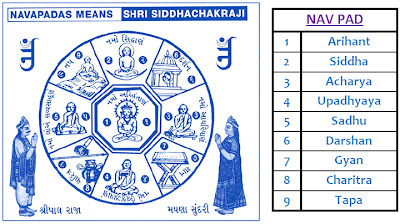
These nine are: ARIHANT, SIDDHA, ACHARYA, UPADHYAYA, SADHU, SAMYAG DARSHAN, SAMYAG GYAN, SAMYAG CHARITRA and SAMYAG TAPA.
Navapad is also called SIDDHA CHAKRA.

SIDDHA CHAKRA YANTRA
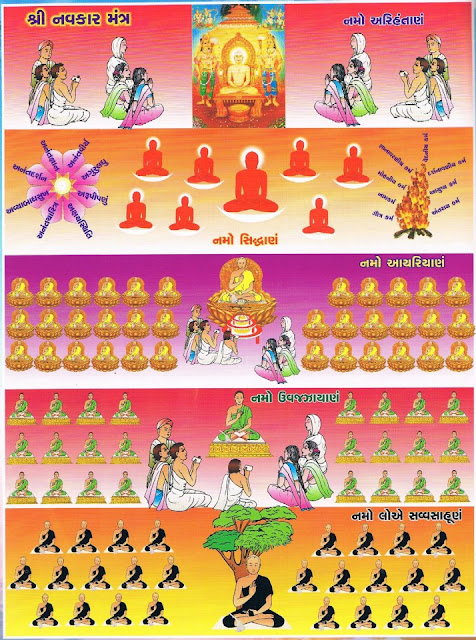
PANCH PARMESHTI PAD

NAVAPAD - Community Ayambil
Speciality of Navapad
The first five posts of Navapad are called Panch Parameshthi, where Param means ultimate or supreme and Esthi means to worship. These five are the eternal powers to be worshipped.
Arihant and Siddha are Deva Tatva (God Principle). Acharya, Upadhyaya and Sadhu are Guru Tatva (Preacher Principle). The last four Pads of Navapad are great virtues depicted as Dharma Tatva (Spirituality Principle) in Jainism. One can attain Moksha (salvation) by observing those virtues. Arihant and Siddha - the first two posts - have accomplished these four virtues. Acharya, Upadhyaya and Sadhu are on the path of accomplishing them.
The Siddhachakra is a Yantra in circular shape. Siddha is placed at the top. Arihant is in the center. Acharya is at the right side of Arihant. Upadhyaya is in the lower side and Sadhu in the left side. Samyag Darshan, Samyag Jnyan, Samyag Charitra and Samyag Tapa are placed in four corners starting from upper right and moving clockwise.
Generally the first five (Panch Parameshthi) are placed in the form of idols and the next four by name only.
Ritual of the Navpad Oli - Daily Worship Numbers
| No. | Name of the Pad | Kayotsarga (Logassa) | Khamasanas | Swastiks | Navkarvalis |
|---|---|---|---|---|---|
| 1. | Aum Rhim Namo Arihantanam | 12 | 12 | 12 | 20 |
| 2. | Aum Rhim Namo Siddhanam | 08 | 08 | 08 | 20 |
| 3. | Aum Rhim Namo Aayariyanam | 36 | 36 | 36 | 20 |
| 4. | Aum Rhim Namo Uvajzayanam | 25 | 25 | 25 | 20 |
| 5. | Aum Rhim Namo Loe Savva Sahunam | 27 | 27 | 27 | 20 |
| 6. | Aum Rhim Namo Dansanassa | 67 | 67 | 67 | 20 |
| 7. | Aum Rhim Namo Nanassa | 51 | 51 | 51 | 20 |
| 8. | Aum Rhim Namo Charittassa | 70 | 70 | 70 | 20 |
| 9. | Aum Rhim Namo Tavvasa | 50 | 50 | 50 | 20 |
Inspiring Pravachans on Each Pad - by Jain Acharya
Below are inspiring pravachans on each Pad by Jain Acharya.
Day 1 - Arihant Pad (Shukla Saptami)
Arihant Pad is the first post of Navapad, placed in the center of Siddhachakra Yantra. It falls among Deva Tatva. Arihant is the supreme power of nature - the purest soul in the universe with a physical body. Ari means enemy and Hant means destroyer. The enemies here are internal - Raga (craving/attachment) and Dvesha (hatred). Hence Arihant is free from earthly attachments and referred to as Veetraga.
Arihant has complete wisdom - Kevala Jnyana. He preaches true spirituality in a Samavasharan and establishes the Chaturvidha Sangha - Sadhu (Monks), Sadhwi (Nuns), Shravaka (Household followers, Male) and Shravika (Household followers, Female). Because he establishes the Teertha, he is also called Tirthankar. He has twelve supreme attributes and is symbolized by the color white.
Jain followers worship Arihant Pada on the first day of Navapad Oli. They perform Ayambil by eating boiled rice only (white - matching Arihant's color).
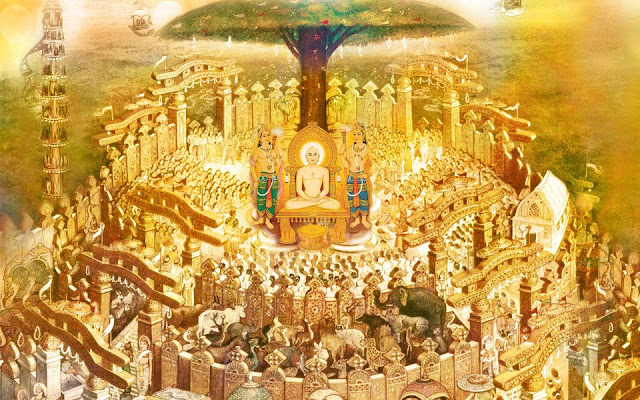
ARIHANT PAD - Lord Mahavir Swami
Pravachan Audio - Day 1 Arihant Pad
Arihant Pad - Chaityavandan, Stavan and Stuti Vidhi

SHREE NAVPAD OLI VIDHI - ARIHANT PAD
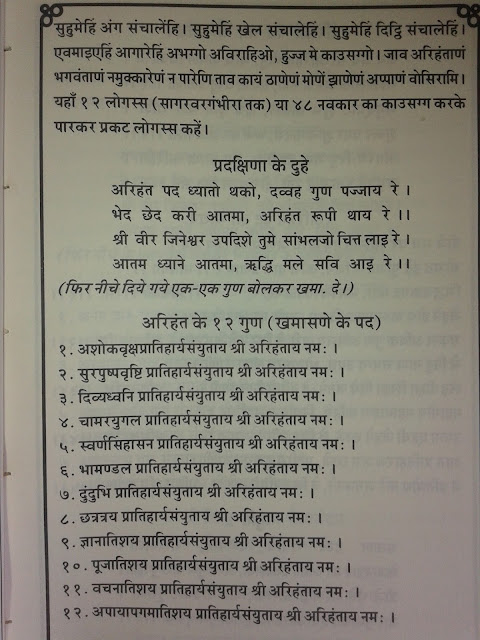
ARIHANT PAD - 12 KHAMASANA AND PRADAKSHINA

SIDDHACHAKRA - ARIHANT PAD CHAITYAVANDAN STAVAN AND STUTI
Day 2 - Siddha Pad (Shukla Astami)
Siddha Pad is the second post of Navapad, placed at the top of Siddhachakra Yantra. It is also Deva Tatva. Siddha is the supreme power of nature - the purest soul in the universe without a physical body. One becomes Siddha after attaining salvation. The Siddha is a Veetraga and universal observer but does not preach as he has no physical body. He lives in perfect equilibrium, eternal peace and joy and remains in perfect motionless rest.
Siddha is free from all Karmic bondage, hence there is no reincarnation. He lives forever above the Siddha Shila at the top of the Universe. He has eight supreme attributes and is symbolized by the color red.
Jain followers worship Siddha Pada on the second day. They perform Ayambil by eating boiled wheat only (red - matching Siddha's color).

SIDDHA PAD - SIDDHA SHILA
Pravachan Audio - Day 2 Siddha Pad
Siddha Pad - Chaityavandan, Stavan and Stuti Vidhi

SIDDHA PAD - KHAMASANA AND PRADAKSHINA

SIDDHACHAKRA - SIDDHA PAD CHAITYAVANDAN STAVAN AND STUTI
Day 3 - Acharya Pad (Shukla Navami)
Acharya Pad is the third post in Navpad, placed at the right side of Arihant in Siddhachakra Yantra. He is the first among Guru Tatva. Acharya is the successor of Arihant and leader of the fourfold Sangh. He is the Supremo and ultimate decision-making authority in all Sangha matters in the absence of Arihant. He is also the ultimate authority in interpretation of the Jain Agam (Holy Scriptures).
He observes and motivates Monks and Nuns for five spiritual conducts - Jnyanachara, Darshanachara, Charitrachara, Tapachara and Veeryachara. The first four relate to the last four Padas of Siddhachakra. Veeryachara is the enthusiasm and power to observe all four. Acharya has thirty six attributes and symbolizes by golden yellow color.
Jain followers worship Acharya Pada on the third day. They perform Ayambil by eating boiled gram only (yellow - matching Acharya's color).

ACHARYA PAD
Pravachan Audio - Day 3 Acharya Pad
Acharya Pad - Chaityavandan, Stavan and Stuti Vidhi

SIDDHACHAKRA - ACHARYA PAD PRADAKSHINA

SIDDHACHAKRA - ACHARYA PAD 36 KHAMASANA
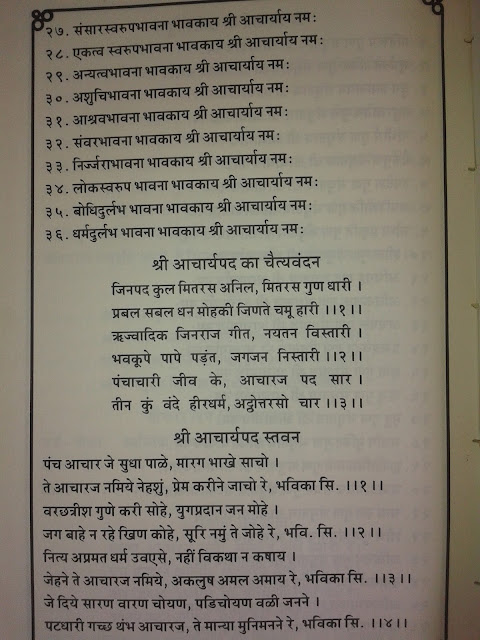
SIDDHACHAKRA - ACHARYA PAD CHAITYAVANDAN AND STUTI

SIDDHACHAKRA - ACHARYA PAD STUTI
Day 4 - Upadhyaya Pad (Shukla Dasami)
Upadhyaya Pad is the fourth post in Navpad, placed in the lower side of Arihant in Siddhachakra Yantra. He is the second among Guru Tatva. He is supposed to know all Jain Agams - eleven Anga and fourteen Purva (twenty five in all). These are his twenty five attributes. He is responsible for academic activities in the Sangha. He preaches and teaches Monks and Nuns. He is like a lieutenant and minister of Acharya. Some sacred Jain scriptures describe him as a Prince in the kingdom of Acharya.
Upadhyaya is symbolized by the color green. Jain followers worship Upadhyaya Pada on the fourth day and perform Ayambil by eating boiled Mung only (green - matching Upadhyaya's color).

UPADHYAYA PAD
Pravachan Audio - Day 4 Upadhyaya Pad
Upadhyaya Pad - Chaityavandan, Stavan and Stuti Vidhi
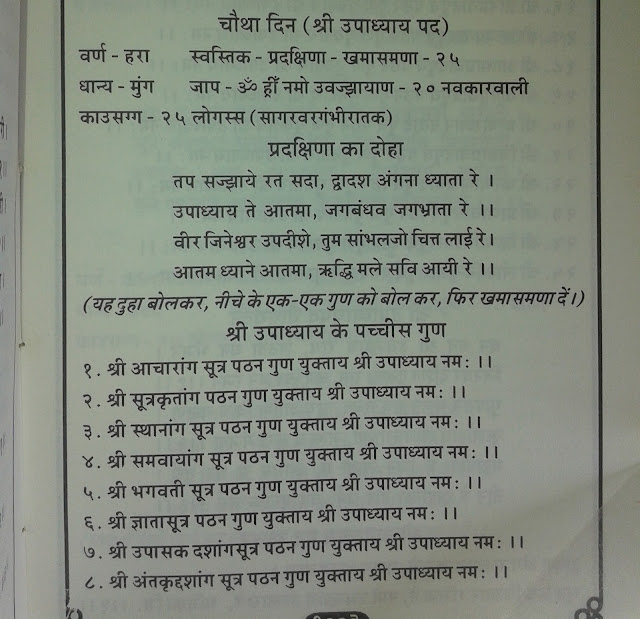
SIDDHACHAKRA - UPADHYAYA PAD KHAMASANA AND PRADAKSHINA
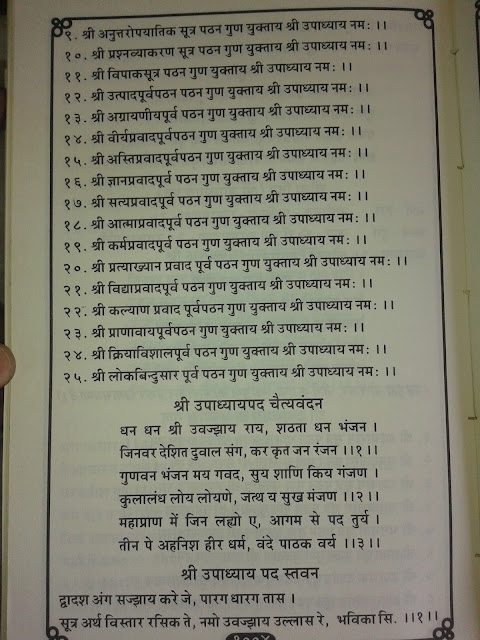
SIDDHACHAKRA - UPADHYAYA PAD CHAITYAVANDAN AND STAVAN

SIDDHACHAKRA - UPADHYAYA PAD STUTI
Day 5 - Sadhu Pad (Shukla Ekadashi)
Sadhu Pad is the fifth post in Navpad, placed in the left side of Arihant in Siddhachakra Yantra. He is the third among Guru Tatva. He has renounced household life and devoted himself to the holy path preached by Arihant and disciplined by Acharya. He devotes himself for the noble path that leads to salvation and practices four sacred virtues.
He has five supreme vows - completely abstaining from:
- Violence
- Lying
- Stealing
- Sexual conduct
- Possessions of earthly things
He practices living in equilibrium in all conditions. He walks bare foot and uses no vehicles. He does not cook for himself or others and lives on food provided by households. He does not keep money or earthly assets. He practices austerity and penance to his optimum capacity under the discipline of Acharya and Upadhyaya. He has twenty seven attributes and is symbolized by the color black.
Jain followers worship Sadhu Pada on the fifth day. They perform Ayambil by eating boiled Udad only (black - matching Sadhu's color).

SADHU PAD
Pravachan Audio - Day 5 Sadhu Pad
Sadhu Pad - Chaityavandan, Stavan and Stuti Vidhi

SIDDHACHAKRA - SADHU PAD KHAMASANA AND PRADAKSHINA

SIDDHACHAKRA - SADHU PAD KHAMASANA

SIDDHACHAKRA - SADHU PAD CHAITYAVANDAN STAVAN AND STUTI
Day 6 - Samyag Darshan Pad (Shukla Dwadashi)
Samyag Darshan - Samyag is a Sanskrit word meaning "right" and Darshan means "view." Hence Samyag Darshan means Right View. It is also described as faith in the preachings of Arihant. This is the sixth Pad of Siddhachakra and first of Dharma Tatva. This is the root of all Dharma (Spirituality). Dharma starts with the right view and perspective. All knowledge is like ignorance without Samyag Darshan.
This is the first among Ratna Trayee (Three Gems) of Jainism to attain salvation. It has sixty seven attributes and symbolizes with white color.
Jain followers worship Samyag Darshan Pada on the sixth day. They perform Ayambil by eating boiled rice only (white color).
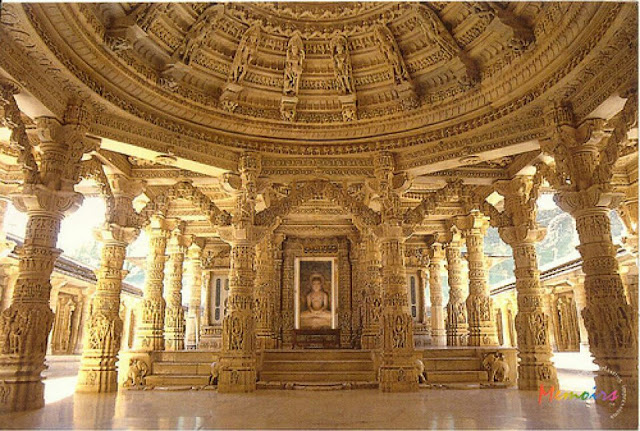
SAMYAG DARSHAN - RIGHT FAITH AND VISION
Pravachan Audio - Day 6 Samyag Darshan Pad
Darshan Pad - Chaityavandan, Stavan and Stuti Vidhi

SIDDHACHAKRA - DARSHAN PAD KHAMASANA AND PRADAKSHINA
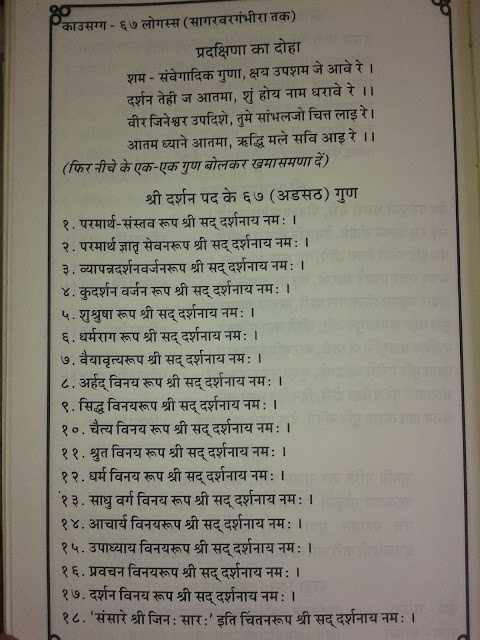
SIDDHACHAKRA - DARSHAN PAD 67 KHAMASANA AND PRADAKSHINA

SIDDHACHAKRA - DARSHAN PAD KHAMASANA

SIDDHACHAKRA - DARSHAN PAD KHAMASANA AND CHAITYAVANDAN

SIDDHACHAKRA - DARSHAN PAD PRADAKSHINA
Day 7 - Samyag Jnyana Pad (Shukla Trayodashi)
Samyag Jnyana - Jnyana (Gyana) means knowledge. Hence Samyag Jnyana refers to Right Knowledge, also called wisdom. This is the seventh Pad of Siddhachakra and second of Dharma Tatva. All actions should be preceded by right knowledge. One cannot discriminate between right and wrong without right knowledge.
This is the second among Ratna Trayee (Three Gems) of Jainism to attain salvation. It has five sub-divisions and fifty one attributes and symbolizes with white color.
Jain followers worship Samyag Jnyana Pada on the seventh day. They perform Ayambil by eating boiled rice only (white color).

SAMYAG GYAN - RIGHT KNOWLEDGE

KALPASUTRA - MAHAVIRA NIRVANA (GYAN)
Pravachan Audio - Day 7 Samyag Gyan Pad
Gyan Pad - Chaityavandan, Stavan and Stuti Vidhi

SIDDHACHAKRA - GYAN PAD KHAMASANA AND PRADAKSHINA

SIDDHACHAKRA - GYAN PAD KHAMASANA AND CHAITYAVANDAN
Day 8 - Samyag Charitra Pad (Shukla Chaturdashi)
Samyag Charitra - Charitra means action or conduct. Hence Samyag Charitra refers to Right Action or Right Conduct. This is the eighth Pad of Siddhachakra and third of Dharma Tatva.
This is the third among Ratna Trayee (Three Gems) of Jainism to attain salvation. It has seventy attributes and symbolizes with white color.
Jain followers worship Samyag Charitra Pada on the eighth day. They perform Ayambil by eating boiled rice only (white color).

SAMYAG CHARITRA - RIGHT CONDUCT
Pravachan Audio - Day 8 Samyag Charitra Pad
Charitra Pad - Chaityavandan, Stavan and Stuti Vidhi

CHARITRA PAD

CHARITRA PAD - KHAMASANA

CHARITRA PAD

CHARITRA PAD
Day 9 - Samyag Tapa Pad (Shukla Purnima - Final Day)
Samyag Tapa - Tapa means austerity or penance. Samyag Tap means austerity in the right perspective and direction. It is the last Pad of Navapad. Jain holy scriptures describe Tap as abstaining from lusts and desires. The goal of austerity is reaching equilibrium and tranquility.
There are two types of austerity - internal and external, each further classified into six types. Fast and penance are among externals. Modesty, nursing and meditation are among the internals. Observing internal austerity is more valuable than externals. It has fifty attributes and symbolizes with white color.
Jain households, Monks and Nuns worship Samyag Tapa Pada on the ninth and final day of Navapad Oli. They perform Ayambil by eating boiled rice only (white color).

SAMYAG TAPA - RIGHT AUSTERITY
Pravachan Audio - Day 9 Samyag Tapa Pad
Tapa Pad - Chaityavandan, Stavan and Stuti Vidhi

TAP PAD

TAP PAD
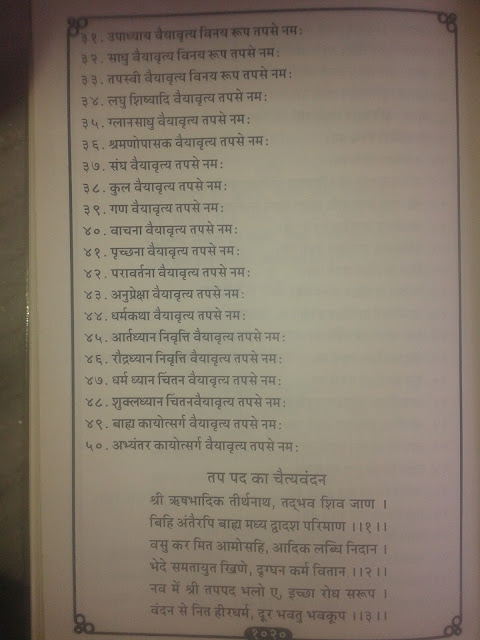
TAP PAD

TAP PAD
Navkar Mantra - Devotional Songs and Stavan
Shripal - Maina Sundari Amar Katha
To listen to the Shripal-Maina Sundari Katha, click the link below:
Download All Navpad Oli Songs from Google Drive
Click below to access the complete collection of all Navpad Oli songs and pravachans:
Click Here to Download All Songs
Note: Click on the song name or the down-arrow icon inside the folder to download individual files.
Navkar Mahamantra - Closing Prayer
Jainam Jayati Shashnam
Reference: Original post - Jain Festival Navpad Oli by Jyoti Kothari

No comments:
Post a Comment