Born on 5 January 1948 is an Indian Jain monk, activist and Gujarati language writer. He is well known for his lectures on spirituality and social issues
He has written more than333+ bookson variety of subjects and holds the Golden Book of World Records for writing more than 300 books in a single language (Gujarati).Lakhi Rakho Aras Ni Takati Par is his most acclaimed book. It is translated in 20 languages.
In 2017, he was awarded Padma Bhushan, the third highest civilian award by Government of India for his contribution in field of spirituality
Navpad Oli (Ayambil) - Jain Festival
|| Navapad Ayambil Oli || नवपद आयम्बिल ओली ||
Siddhachakra Tap - Navpad Pravachan
Let us first listen to Navkar Mahamantra / Namaskar Mahamantra to begin
The virtues of the Siddha Chakra are so many, we cannot describe them.
They fulfil the desires of the worshipper.
We pray to them a thousand times.
About Navpad Oli - Jain Festival
Navpad and Navapad Oli holds great significance in Jainism. It is one of the most
important religious festivals of the Jain community. Navpad Oli comes twice a year -
in Chaitra (March/April) and Ashwin (September/October).
Devotees observe Ayambil Tap during the nine days of Navpad Oli.
The festival falls exactly between Shukla Saptami (Seventh lunar day) and Purnima
(Full moon day) in both Ashwina and Chaitra months. Navapad Oli starts in the middle
of Navratri. Both Navapad Olis fall among the five Shaswata Atthai of Jain. The
remaining three Atthai are Chaturmasik Atthai (observed thrice a year).
Jains perform Ayambil Tapa for nine days to salute the nine supreme
posts in the universe. Ayambil is a special type of fast in which one eats only boiled
grains once a day. It is not permitted to add anything - including salt - to the boiled
grains. Hence it is considered very difficult for a layman to perform Ayambil Tap.
The earth's day and night are almost equal during March-April and September-October -
the seasons of Navapad Oli. These are moderate seasons perfectly suitable for worshipping
the supreme powers of the universe. Devotion and Navpad prayer keeps us mentally healthy,
whereas Ayambil and penance energizes us physically.
Nava means nine in Sanskrit and Prakrit languages and Pada
means post. Hence Navapada means nine supreme posts of the universe.
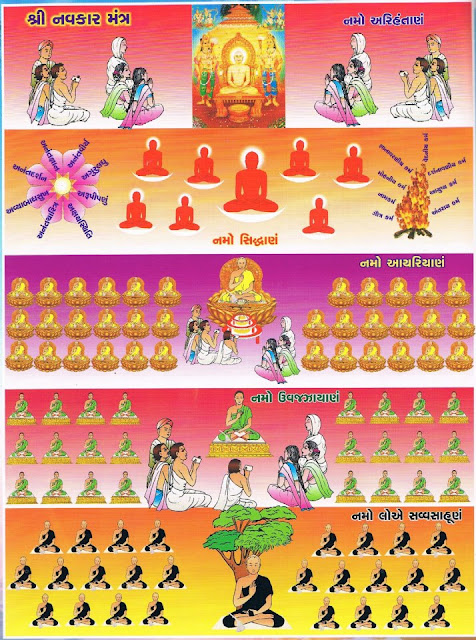
These nine are: ARIHANT, SIDDHA, ACHARYA, UPADHYAYA, SADHU,
SAMYAG DARSHAN, SAMYAG GYAN, SAMYAG CHARITRA and SAMYAG TAPA.
The first five posts of Navapad are called Panch Parameshthi, where
Param means ultimate or supreme and Esthi means to
worship. These five are the eternal powers to be worshipped.
Arihant and Siddha are Deva Tatva (God Principle). Acharya, Upadhyaya
and Sadhu are Guru Tatva (Preacher Principle). The last four Pads of
Navapad are great virtues depicted as Dharma Tatva (Spirituality
Principle) in Jainism. One can attain Moksha (salvation) by observing
those virtues. Arihant and Siddha - the first two posts - have accomplished these four
virtues. Acharya, Upadhyaya and Sadhu are on the path of accomplishing them.
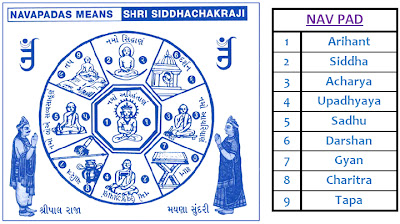
The Siddhachakra is a Yantra in circular shape. Siddha is placed at
the top. Arihant is in the center. Acharya is at the
right side of Arihant. Upadhyaya is in the lower side and
Sadhu in the left side. Samyag Darshan, Samyag Jnyan, Samyag Charitra
and Samyag Tapa are placed in four corners starting from upper right and moving clockwise.
Generally the first five (Panch Parameshthi) are placed in the form of idols and the
next four by name only.
Ritual of the Navpad Oli - Daily Worship Numbers
No.
Name of the Pad
Kayotsarga (Logassa)
Khamasanas
Swastiks
Navkarvalis
1.
Aum Rhim Namo Arihantanam
12
12
12
20
2.
Aum Rhim Namo Siddhanam
08
08
08
20
3.
Aum Rhim Namo Aayariyanam
36
36
36
20
4.
Aum Rhim Namo Uvajzayanam
25
25
25
20
5.
Aum Rhim Namo Loe Savva Sahunam
27
27
27
20
6.
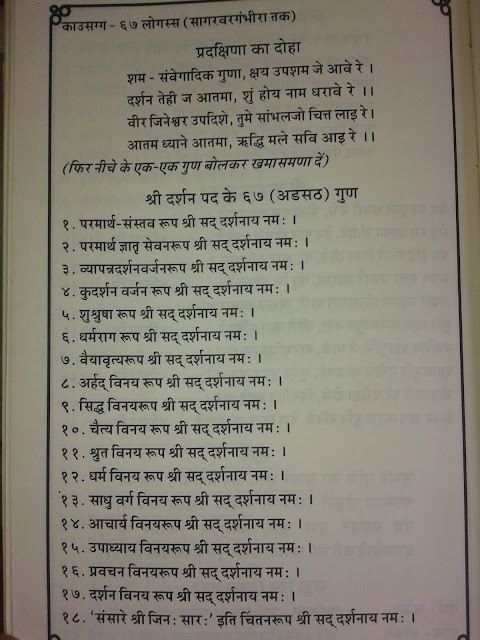
Aum Rhim Namo Dansanassa
67
67
67
20
7.
Aum Rhim Namo Nanassa
51
51
51
20
8.
Aum Rhim Namo Charittassa
70
70
70
20
9.
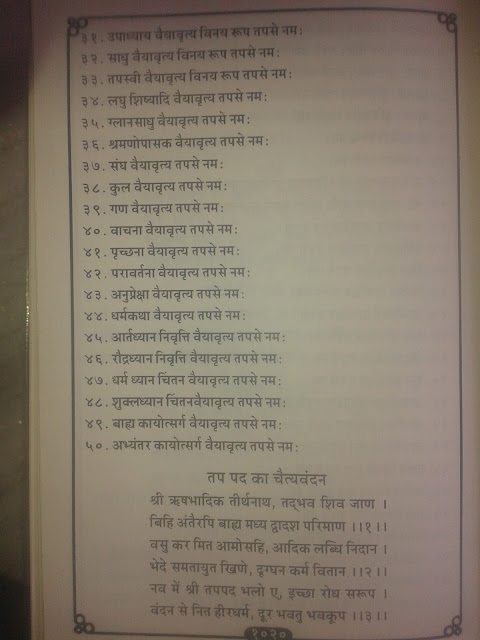
Aum Rhim Namo Tavvasa
50
50
50
20
Inspiring Pravachans on Each Pad - by Jain Acharya
Below are inspiring pravachans on each Pad by Jain Acharya.
Day 1 - Arihant Pad (Shukla Saptami)
Arihant Pad is the first post of Navapad, placed in the center of
Siddhachakra Yantra. It falls among Deva Tatva. Arihant is the supreme power of nature -
the purest soul in the universe with a physical body. Ari means enemy
and Hant means destroyer. The enemies here are internal -
Raga (craving/attachment) and Dvesha (hatred). Hence
Arihant is free from earthly attachments and referred to as Veetraga.
Arihant has complete wisdom - Kevala Jnyana. He preaches true
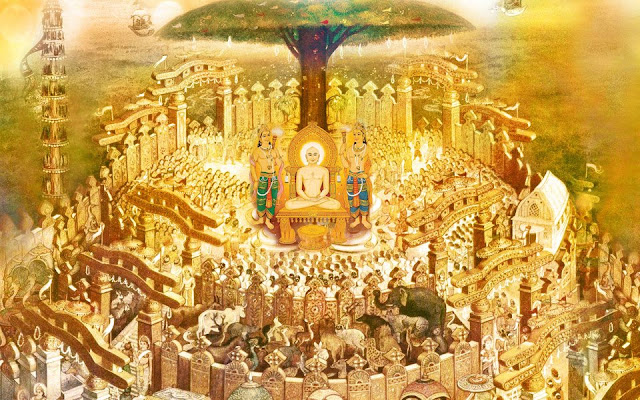
spirituality in a Samavasharan and establishes the
Chaturvidha Sangha - Sadhu (Monks), Sadhwi (Nuns), Shravaka
(Household followers, Male) and Shravika (Household followers, Female). Because he
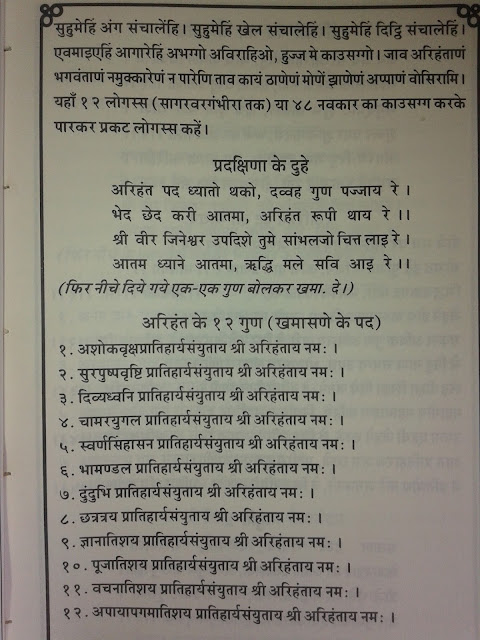
establishes the Teertha, he is also called Tirthankar. He has twelve
supreme attributes and is symbolized by the color white.
Jain followers worship Arihant Pada on the first day of Navapad Oli. They perform
Ayambil by eating boiled rice only (white - matching Arihant's color).
Arihant Pad - Chaityavandan, Stavan and Stuti Vidhi
SHREE NAVPAD OLI VIDHI - ARIHANT PAD
ARIHANT PAD - 12 KHAMASANA AND PRADAKSHINA
SIDDHACHAKRA - ARIHANT PAD CHAITYAVANDAN STAVAN AND STUTI
Day 2 - Siddha Pad (Shukla Astami)
Siddha Pad is the second post of Navapad, placed at the top of
Siddhachakra Yantra. It is also Deva Tatva. Siddha is the supreme power of nature -
the purest soul in the universe without a physical body. One becomes Siddha
after attaining salvation. The Siddha is a Veetraga and universal observer but does
not preach as he has no physical body. He lives in perfect
equilibrium, eternal peace and joy and remains in perfect motionless rest.
Siddha is free from all Karmic bondage, hence there is no reincarnation. He lives
forever above the Siddha Shila at the top of the Universe. He has
eight supreme attributes and is symbolized by the color red.
Jain followers worship Siddha Pada on the second day. They perform Ayambil by eating
boiled wheat only (red - matching Siddha's color).
Siddha Pad - Chaityavandan, Stavan and Stuti Vidhi
SIDDHA PAD - KHAMASANA AND PRADAKSHINA
SIDDHACHAKRA - SIDDHA PAD CHAITYAVANDAN STAVAN AND STUTI
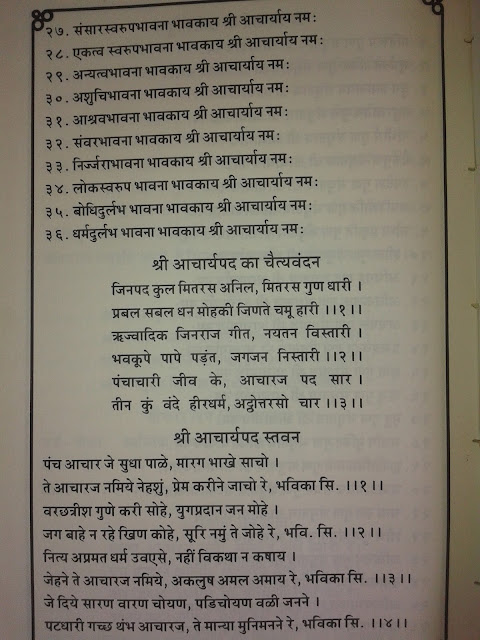
Day 3 - Acharya Pad (Shukla Navami)
Acharya Pad is the third post in Navpad, placed at the right side of
Arihant in Siddhachakra Yantra. He is the first among Guru Tatva. Acharya is the
successor of Arihant and leader of the fourfold Sangh. He is the Supremo and ultimate
decision-making authority in all Sangha matters in the absence of Arihant. He is also
the ultimate authority in interpretation of the Jain Agam
(Holy Scriptures).
He observes and motivates Monks and Nuns for five spiritual conducts -
Jnyanachara, Darshanachara, Charitrachara, Tapachara and
Veeryachara. The first four relate to the last four Padas of
Siddhachakra. Veeryachara is the enthusiasm and power to observe all four.
Acharya has thirty six attributes and symbolizes by golden yellow color.
Jain followers worship Acharya Pada on the third day. They perform Ayambil by eating
boiled gram only (yellow - matching Acharya's color).
Acharya Pad - Chaityavandan, Stavan and Stuti Vidhi
SIDDHACHAKRA - ACHARYA PAD PRADAKSHINA
SIDDHACHAKRA - ACHARYA PAD 36 KHAMASANA
SIDDHACHAKRA - ACHARYA PAD CHAITYAVANDAN AND STUTI
SIDDHACHAKRA - ACHARYA PAD STUTI
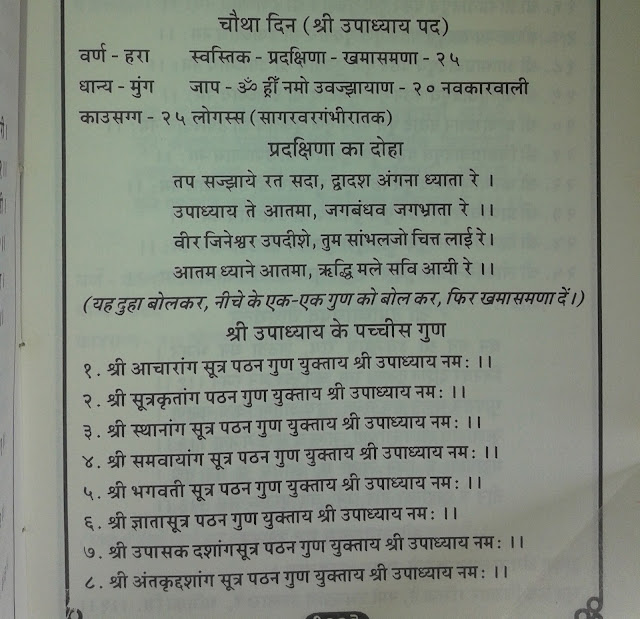
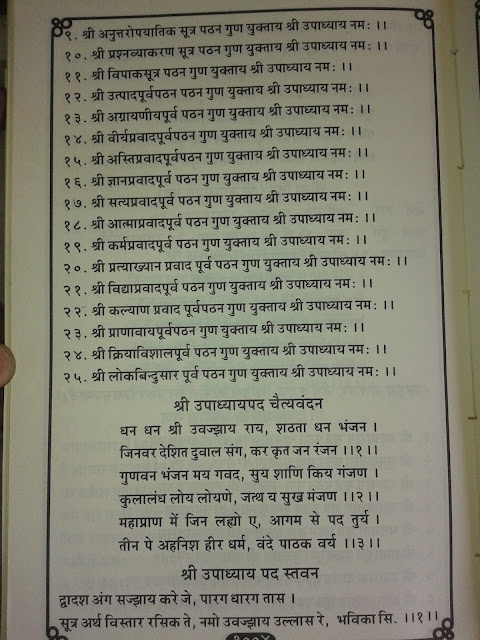
Day 4 - Upadhyaya Pad (Shukla Dasami)
Upadhyaya Pad is the fourth post in Navpad, placed in the lower side
of Arihant in Siddhachakra Yantra. He is the second among Guru Tatva. He is supposed
to know all Jain Agams - eleven Anga and fourteen Purva (twenty five in all). These
are his twenty five attributes. He is responsible for academic activities in the Sangha.
He preaches and teaches Monks and Nuns. He is like a lieutenant and minister of Acharya.
Some sacred Jain scriptures describe him as a Prince in the kingdom of Acharya.
Upadhyaya is symbolized by the color green. Jain followers worship
Upadhyaya Pada on the fourth day and perform Ayambil by eating boiled
Mung only (green - matching Upadhyaya's color).
Upadhyaya Pad - Chaityavandan, Stavan and Stuti Vidhi
SIDDHACHAKRA - UPADHYAYA PAD KHAMASANA AND PRADAKSHINA
SIDDHACHAKRA - UPADHYAYA PAD CHAITYAVANDAN AND STAVAN
SIDDHACHAKRA - UPADHYAYA PAD STUTI
Day 5 - Sadhu Pad (Shukla Ekadashi)
Sadhu Pad is the fifth post in Navpad, placed in the left side of
Arihant in Siddhachakra Yantra. He is the third among Guru Tatva. He has renounced
household life and devoted himself to the holy path preached by Arihant and disciplined
by Acharya. He devotes himself for the noble path that leads to salvation and practices
four sacred virtues.
He has five supreme vows - completely abstaining from:
Violence
Lying
Stealing
Sexual conduct
Possessions of earthly things
He practices living in equilibrium in all conditions. He walks bare foot and uses no
vehicles. He does not cook for himself or others and lives on food provided by
households. He does not keep money or earthly assets. He practices austerity and
penance to his optimum capacity under the discipline of Acharya and Upadhyaya. He
has twenty seven attributes and is symbolized by the color black.
Jain followers worship Sadhu Pada on the fifth day. They perform Ayambil by eating
boiled Udad only (black - matching Sadhu's color).
SIDDHACHAKRA - SADHU PAD KHAMASANA AND PRADAKSHINA
SIDDHACHAKRA - SADHU PAD KHAMASANA
SIDDHACHAKRA - SADHU PAD CHAITYAVANDAN STAVAN AND STUTI
Day 6 - Samyag Darshan Pad (Shukla Dwadashi)
Samyag Darshan - Samyag is a Sanskrit word meaning "right" and
Darshan means "view." Hence Samyag Darshan means Right View. It is also described as
faith in the preachings of Arihant. This is the sixth Pad of Siddhachakra and first
of Dharma Tatva. This is the root of all Dharma (Spirituality). Dharma starts with
the right view and perspective. All knowledge is like ignorance without Samyag Darshan.
This is the first among Ratna Trayee (Three Gems) of Jainism to
attain salvation. It has sixty seven attributes and symbolizes with white color.
Jain followers worship Samyag Darshan Pada on the sixth day. They perform Ayambil by
eating boiled rice only (white color).
SAMYAG DARSHAN - RIGHT FAITH AND VISION
Pravachan Audio - Day 6 Samyag Darshan Pad
Day 6 - Samyag Darshan Pad Pravachan by Jain Acharya
Darshan Pad - Chaityavandan, Stavan and Stuti Vidhi
SIDDHACHAKRA - DARSHAN PAD KHAMASANA AND PRADAKSHINA
SIDDHACHAKRA - DARSHAN PAD 67 KHAMASANA AND PRADAKSHINA
SIDDHACHAKRA - DARSHAN PAD KHAMASANA
SIDDHACHAKRA - DARSHAN PAD KHAMASANA AND CHAITYAVANDAN
SIDDHACHAKRA - DARSHAN PAD PRADAKSHINA
Day 7 - Samyag Jnyana Pad (Shukla Trayodashi)
Samyag Jnyana - Jnyana (Gyana) means knowledge. Hence Samyag Jnyana
refers to Right Knowledge, also called wisdom. This is the seventh Pad of Siddhachakra
and second of Dharma Tatva. All actions should be preceded by right knowledge. One
cannot discriminate between right and wrong without right knowledge.
This is the second among Ratna Trayee (Three Gems) of Jainism to
attain salvation. It has five sub-divisions and fifty one attributes and symbolizes
with white color.
Jain followers worship Samyag Jnyana Pada on the seventh day. They perform Ayambil by
eating boiled rice only (white color).
SIDDHACHAKRA - GYAN PAD KHAMASANA AND CHAITYAVANDAN
Day 8 - Samyag Charitra Pad (Shukla Chaturdashi)
Samyag Charitra - Charitra means action or conduct. Hence Samyag
Charitra refers to Right Action or Right Conduct. This is the eighth Pad of
Siddhachakra and third of Dharma Tatva.
This is the third among Ratna Trayee (Three Gems) of Jainism to
attain salvation. It has seventy attributes and symbolizes with white color.
Jain followers worship Samyag Charitra Pada on the eighth day. They perform Ayambil
by eating boiled rice only (white color).
SAMYAG CHARITRA - RIGHT CONDUCT
Pravachan Audio - Day 8 Samyag Charitra Pad
Day 8 - Samyag Charitra Pad Pravachan by Jain Acharya
Charitra Pad - Chaityavandan, Stavan and Stuti Vidhi
CHARITRA PAD
CHARITRA PAD - KHAMASANA
CHARITRA PAD
CHARITRA PAD
Day 9 - Samyag Tapa Pad (Shukla Purnima - Final Day)
Samyag Tapa - Tapa means austerity or penance. Samyag Tap means
austerity in the right perspective and direction. It is the last Pad of Navapad. Jain
holy scriptures describe Tap as abstaining from lusts and desires. The goal of
austerity is reaching equilibrium and tranquility.
There are two types of austerity - internal and external,
each further classified into six types. Fast and penance are among externals. Modesty,
nursing and meditation are among the internals. Observing internal austerity is more
valuable than externals. It has fifty attributes and symbolizes with
white color.
Jain households, Monks and Nuns worship Samyag Tapa Pada on the ninth and final day
of Navapad Oli. They perform Ayambil by eating boiled rice only
(white color).